
There are moments in one’s professional journey that remind you why you chose to do what you do. For me, Thursday, 19 November 2026, was one of those moments.
After many hours of planning, consultations, technical discussions, design and development, I had the honour of presenting the Uganda Microfinance Forum’s new brand identity, official website and National Microfinance and Financial Inclusion Data Warehouse at the 4th National Microfinance and Savings Groups Conference, held at Hotel Africana in Kampala.
The presentation was made before Hon. Henry Musasizi, Minister of Finance, Planning and Economic Development, and Hon. Shartsi K. Musherure, Minister of State for Microfinance, ahead of the official launch of these initiatives.
As Chairperson of the Technology & Digitization Working Group of the Uganda Microfinance Forum, this was a particularly fulfilling moment. Seeing the work we had undertaken with colleagues reach a national platform, before government leaders and stakeholders from across the financial sector, was both an honour and a proud professional milestone.
The Journey Behind the Launch

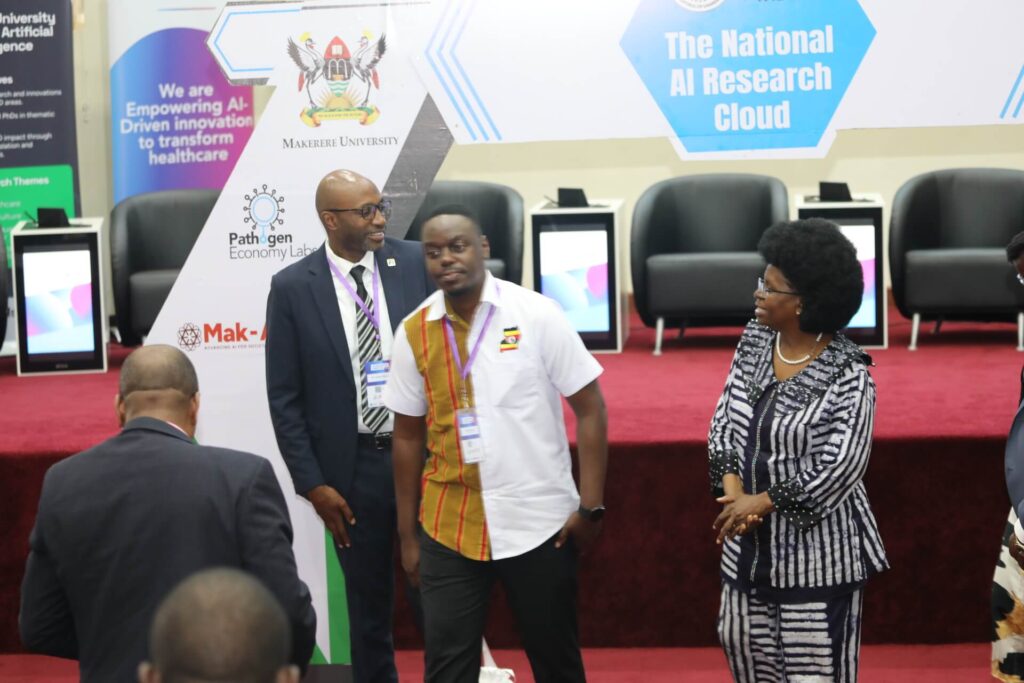
Dickson Mushabe, Microfinance Forum members with Hon. Henry Musasizi, Minister of Finance, Planning and Economic Development, alongside Hon. Shartsi K. Musherure, Minister of State for Microfinance at the launch
When we began working on these initiatives, our objective was to help strengthen the Microfinance Forum’s institutional identity and establish digital foundations that could support its growing role in Uganda’s financial inclusion agenda.
The work involved much more than developing a website or designing a logo. It required us to consider how technology could support the Forum’s mandate, improve coordination among stakeholders and contribute to better decision-making across the sector.
Through the Technology & Digitization Working Group, we worked on the Forum’s brand identity, its digital presence and the blueprint for a National Microfinance and Financial Inclusion Data Warehouse.
There were many discussions, reviews and decisions along the way. Like most technology projects, the work required patience, collaboration and a clear understanding of the problems we were trying to solve.
I have always believed that technology is most valuable when it addresses a real challenge. This initiative gave us an opportunity to apply that principle to a sector that plays an important role in Uganda’s economic development.
One Country. Many Pieces. No Whole Picture.
Of the initiatives we presented, the National Microfinance and Financial Inclusion Data Warehouse is particularly significant to me.
During my presentation, I used a simple statement to describe one of the challenges facing Uganda’s microfinance sector:
One country. Many pieces. No whole picture.
Uganda has numerous institutions collecting valuable information about financial services. Regulators have their data, SACCOs and microfinance institutions maintain their records, government programmes generate reports, and development partners collect information about the interventions they support.
Yet much of this information remains scattered across different institutions and systems.
This makes it difficult to obtain a comprehensive understanding of financial inclusion across the country.
How many people are accessing financial services? Which communities remain underserved? What are the trends in savings and lending? How can we better measure the impact of government financing programmes on households and enterprises?
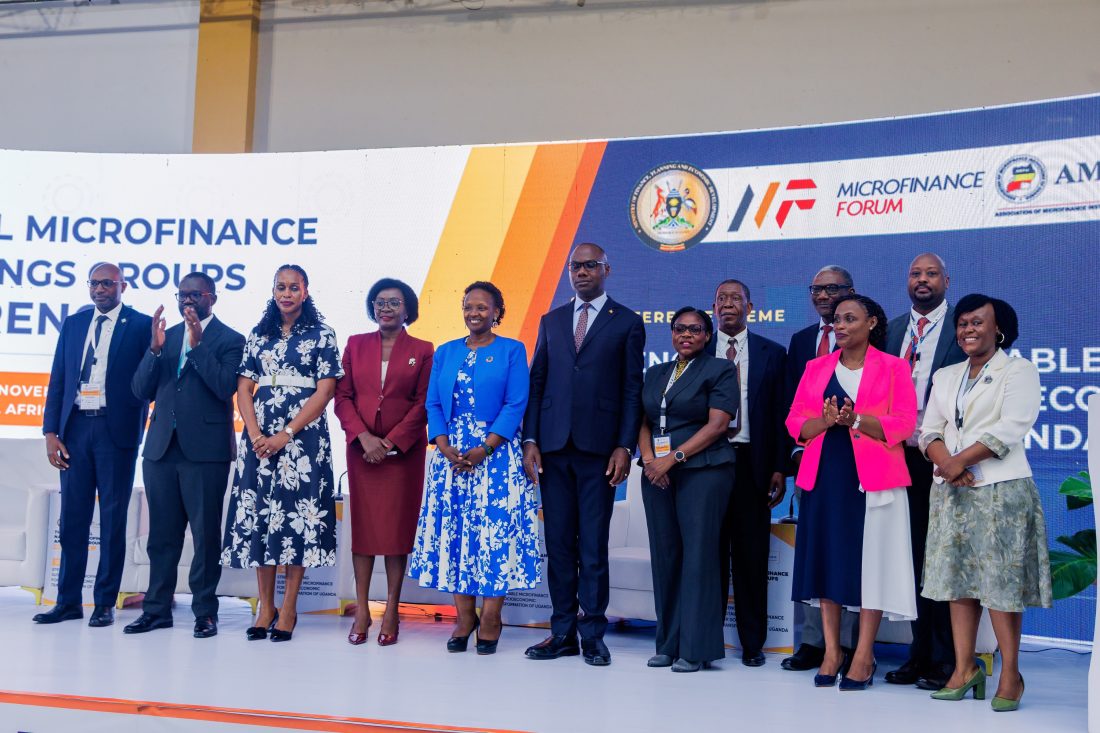
Microfinance Forum members with Hon. Henry Musasizi, Minister of Finance, Planning and Economic Development, alongside Hon. Shartsi K. Musherure, Minister of State for Microfinance. at the launch
Answering these questions requires reliable and coordinated information.
The National Microfinance and Financial Inclusion Data Warehouse is intended to help address this challenge by providing a trusted national platform through which information from participating institutions can be consolidated, analysed and presented to support decision-making.
Our approach is guided by an important principle: institutions should retain ownership of their data while contributing to a broader national understanding of the sector.
The proposed platform is also designed to promote transparency by tracing figures to their original sources, identifying gaps in available information and clearly distinguishing estimates from verified data.
The launch represents an important milestone in this journey, although further work remains in expanding institutional participation, strengthening data integration and developing the platform’s capabilities.
For me, the excitement lies in what such a platform could eventually make possible for policymakers, regulators, researchers and financial service providers.
Building the Microfinance Forum’s Digital Identity
Alongside the Data Warehouse, we presented the Forum’s new brand identity and official website, www.mff.or.ug .
An institution’s identity matters. It influences how people recognise it, understand its mandate and engage with its work.
The new brand gives the Microfinance Forum a more consistent and recognisable identity, while the website provides a digital home for information about its activities, programmes and stakeholder engagements.
As someone who has spent many years working in the technology sector, I have seen how a well-designed digital presence can improve communication, strengthen institutional credibility and create opportunities for collaboration.
For an organisation that brings together government, regulators, financial institutions, SACCOs, development partners and other stakeholders, these are important foundations.
I was pleased to see both initiatives formally unveiled at the conference.
Why Better Data Matters for Financial Inclusion
The conference also provided an opportunity to reflect on the scale of Uganda’s financial inclusion agenda.
In her remarks following the conference, Hon. Shartsi K. Musherure highlighted Government’s substantial investment in programmes such as the Parish Development Model, Emyooga, the Agricultural Credit Facility and other initiatives intended to improve household incomes and access to finance.
According to the figures she shared, Government has invested approximately UGX 4.4 trillion in the Parish Development Model, supporting about 3.57 million Ugandans through 1,589 SACCOs.
These investments demonstrate the importance of financial inclusion to Uganda’s development priorities.
However, as financial inclusion programmes expand, the need for accurate and accessible information becomes even more important.
We must be able to understand not only how much money is being disbursed, but also who is benefiting, which areas are being reached and where additional support is required.
This is where I believe technology and data can make a meaningful contribution.
Good data does not replace good policy. It helps us make better policy decisions.
A coordinated national Data Warehouse has the potential to strengthen this process by providing a clearer picture of the sector and supporting more informed interventions.
A Proud Moment in My Technology Journey
My professional journey has largely revolved around building technology solutions, supporting businesses and exploring how digital innovation can solve practical problems.
Through my work at Hostalite and other technology initiatives, I have had the opportunity to contribute to projects across different sectors.
However, participating in an initiative with the potential to strengthen national financial inclusion information systems carries a different kind of significance.
Standing before the ministers and conference delegates to present what we had been working on was a memorable experience.

A light moment, Dickson Mushabe, Microfinance Forum members Hon. Shartsi K. Musherure, Minister of State for Microfinance and the at the Launch the Dataware House
It reminded me that many important achievements begin with discussions, ideas and a willingness to take responsibility for making things happen.
The process is rarely straightforward. It involves challenges, adjustments and many hours of work that are not always visible when the final product is presented.
But seeing an idea progress into something tangible makes the effort worthwhile.
I am grateful to have been part of this journey.
Appreciation and the Work Ahead
I wish to appreciate Dr. Andrew Obara, Chairperson of the Uganda Microfinance Forum, for his leadership and commitment to strengthening the Forum and advancing these initiatives.
My appreciation also goes to the Ministry of Finance, Planning and Economic Development, the Forum’s Secretariat, my fellow members of the Technology & Digitization Working Group, and the stakeholders who have contributed to this work.
I am particularly grateful to Hon. Henry Musasizi and Hon. Shartsi K. Musherure for officiating at the launch and for their continued commitment to strengthening Uganda’s microfinance sector.
To my colleagues in the Working Group, this milestone reflects our collective effort. It has been a privilege working alongside you.
As we celebrate the launch, I am equally conscious that the most important work lies ahead.
The National Microfinance and Financial Inclusion Data Warehouse must continue evolving through stronger institutional participation, reliable data, appropriate governance and practical applications that support decision-making.
The Forum’s website and brand must also continue serving as effective tools for communication, coordination and engagement.
For me, the greatest satisfaction will come from seeing these initiatives make a meaningful contribution to Uganda’s financial inclusion journey.
The launch was a proud moment, and I look forward to what we can achieve next.
Dickson Mushabe is a technology entrepreneur, Founder and CEO of Hostalite Ltd, and Chairperson of the Technology & Digitization Working Group of the Uganda Microfinance Forum.
Conference: 4th National Microfinance and Savings Groups Conference 2026
Date: 19 November 2026
Venue: Hotel Africana, Kampala
Forum website: https://mff.or.ug